BUKHARA STATE UNIVERSITY
Department of Differential Equations
One of the university's leading academic units, dedicated to preparing highly qualified specialists in mathematics and mechanics, advancing scientific research, expanding international cooperation, and providing students with modern theoretical and practical knowledge.
Historical ties to BSU and BSPI
Mathematics and Mechanics
Research Cooperation and Dual Education
Bachelor's, Master's and Doctoral Studies
About the Department
The history of the Department of Differential Equations is closely connected with the development of Bukhara State University and the former Bukhara State Pedagogical Institute. Although the Department operated under different names over the years, it has maintained its academic traditions in mathematics education, scientific research, and specialist training.
During the 1960s, it was known as the Department of Mathematics, headed by A. Yusupov. In subsequent years, the Department contributed to the development of the university's scientific and pedagogical traditions.
Today, the Department provides education at bachelor's, master's, and basic doctoral levels, conducts research in mathematics and mechanics, and promotes international academic cooperation.
History and Development
1960s — Department of Mathematics
The Department operated under the name Mathematics, with A. Yusupov serving as Head.
2010 — Organizational Restructuring
The Departments of Differential Equations and Algebra and Analysis were merged to establish the Department of Mathematical Physics and Analysis, headed by R.T. Muxitdinov, Candidate of Physical and Mathematical Sciences.
2015–2018 — Department of Mathematics
In 2015, the Department was renamed Mathematics. Until January 2018, it was headed by I.M. Jo‘rayev, Candidate of Physical and Mathematical Sciences and Associate Professor.
2018–2020
From April 2018, N.H. Mamatova, Candidate of Physical and Mathematical Sciences and Associate Professor, headed the Department.
October 2020 — Reorganization
The Department of Mathematics was divided into two departments: Differential Equations and Mathematical Analysis.
2020–2026
Until June 2026, the Department was headed by U.D. Durdiyev, Candidate of Physical and Mathematical Sciences and Associate Professor.
Since September 2026
J.Z. Nuriddinov, Doctor of Philosophy (PhD) in Physical and Mathematical Sciences and Associate Professor, has been serving as Acting Head of the Department.
Academic and Research Capacity
3
Young Teachers with Master's Degrees from NSU
The Department's academic staff includes 2 Doctors of Sciences, 11 Candidates of Sciences, 1 Senior Lecturer, 3 young teachers who earned master's degrees from Novosibirsk State University, and 14 teachers.
Over the years, leading scholars from Moscow, Kyiv, Novosibirsk, Kazan, Tashkent, and Samarkand have delivered specialized courses and guest lectures to students.
Department Leadership
Acting Head of the Department
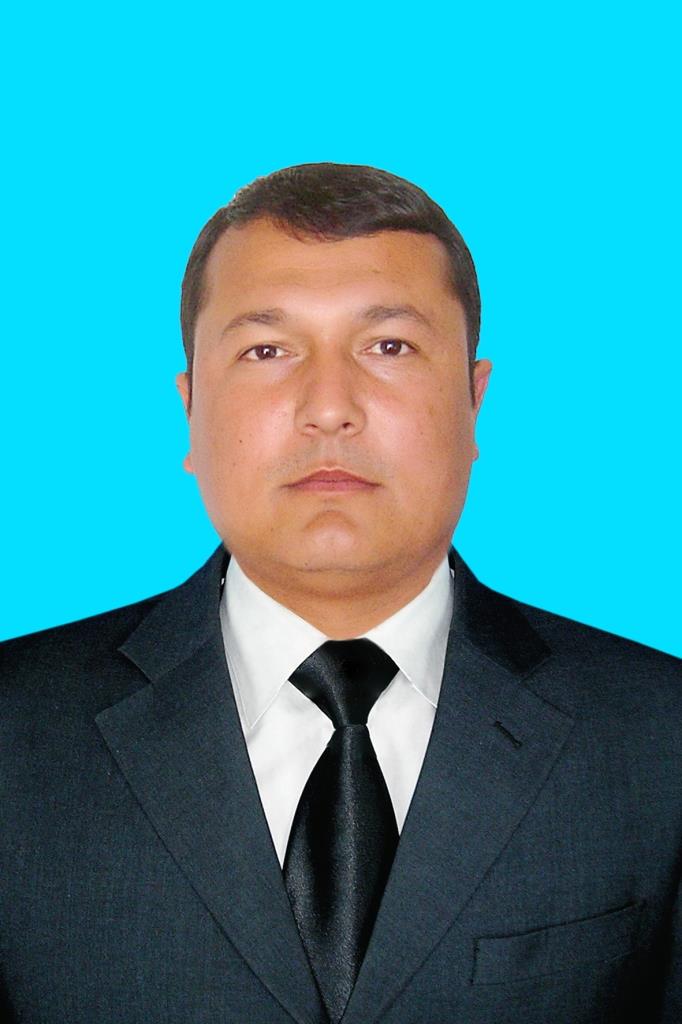
J.Z. Nuriddinov
Doctor of Philosophy (PhD) in Physical and Mathematical Sciences, Associate Professor. Serving as Acting Head since September 2026.
Degree Programs and Specializations
Bachelor's Degree
60530600 — Mechanics and Mathematical Modeling
60540100 — Mathematics
A total of 658 students are enrolled in full-time and part-time study formats.
Master's Degree
70540101 — Mathematics
The program currently has 36 master's students.
Basic Doctoral Studies
01.01.02 — Differential Equations and Mathematical Physics
01.01.04 — Geometry and Topology
PRACTICAL INTEGRATION AND COOPERATION
Dual Education and Department Branch
To implement the objectives set out in Presidential Decree No. PF-93 of July 12, 2023, and Cabinet of Ministers Resolution No. 14 of January 16, 2025, a branch of the Department of Differential Equations was established at the Karakul Academic Lyceum.
The branch supports the development of dual education, strengthens the practical orientation of teaching, helps identify talented young people, and prepares them for further higher education.
Research Areas
Equations of Mathematical Physics
Theoretical and applied research on inverse problems for equations of mathematical physics.
Mechanics of Deformable Solids
Research on deformable solid mechanics and solutions to related mathematical problems.
Theory of Oscillations
Mathematical modeling and analysis of oscillatory processes and their practical applications.
Scientific Cooperation
The Department maintains research partnerships with prominent scientific institutions and universities in Uzbekistan and abroad. These collaborations promote joint research, academic exchange, and scientific dialogue.
Main Partners
- Bukhara Branch of the V.I. Romanovskiy Institute of Mathematics
- Samarkand State University
- Urgench State University
- Novosibirsk State University
- Kazan Federal University
- School of Mathematics, Jilin University, China
Forms of Cooperation
- Research cooperation agreements
- Specialized courses and guest lectures
- Joint research and scientific consultations
- Academic exchange and scholarly communication
- Support for students and young researchers
Distinguished Visiting Scholars
I. Kukles, B. Boltyanskiy, O. Danilov, T. Jo‘rayev, Sh. Ayupov, G‘. G‘anixodjayev, N. G‘anixodjayev, S. Abdunazarov, U. Rozikov, R. Beshimov, and other scholars have delivered special courses and lectures at the Department.
Courses Taught by the Department
The Department's academic staff teaches foundational, general professional, and specialized subjects according to university curricula, helping students develop theoretical knowledge, practical skills, and professional competencies.
Core Courses
- Algebra
- Analytic Geometry
- Linear Algebra
- Differential Geometry and Topology
- Differential Equations
- Equations of Mathematical Physics
- Mathematical Practicum
- Calculus of Variations and Optimization
- Theoretical Mechanics
Academic Programs Served
The courses are primarily offered to students in Mathematics, Mechanics and Mathematical Modeling, and other relevant study programs.
They provide a solid foundation in mathematics and professional preparation.
Courses for Other Programs
Faculty of Economics — Applied Mathematics
Agronomy — Higher Mathematics
Teaching takes into account the specific professional needs of each field. Economics students focus on mathematical analysis and modeling of economic processes, while agronomy students apply mathematical knowledge to practical and computational problems.
Department Priorities
Preparing qualified bachelor's and master's graduates and researchers through fundamental education in mathematics and mechanics.
Advancing scientific research and international cooperation while supporting students and early-career researchers.
Improving educational quality through dual education, practical integration, and modern teaching methods.


 buxdu_rektor@buxdu.uz
 (+998) 65 221-30-46


 EN
 UZ
 RU
 ZH-CN