24.09.2026
III International Bioeconomy Forum at Bukhara State University: Global Experience, Scientific Ideas and Prospects for Sustainable Development
On 24 September 2026, the III International Bioeconomy Forum entitled “Enhancing the Efficiency of the Circular Bioeconomy and Accelerating Sustainable Development through Global Integration” commenced at Bukhara State University.
The two-day forum, scheduled for 24–25 September, is jointly organized by Bukhara State University, the Bukhara Regional Department of Ecology and Climate Change, and the Scientific and Practical Research Centre for the Development of Natural and Human Capital.
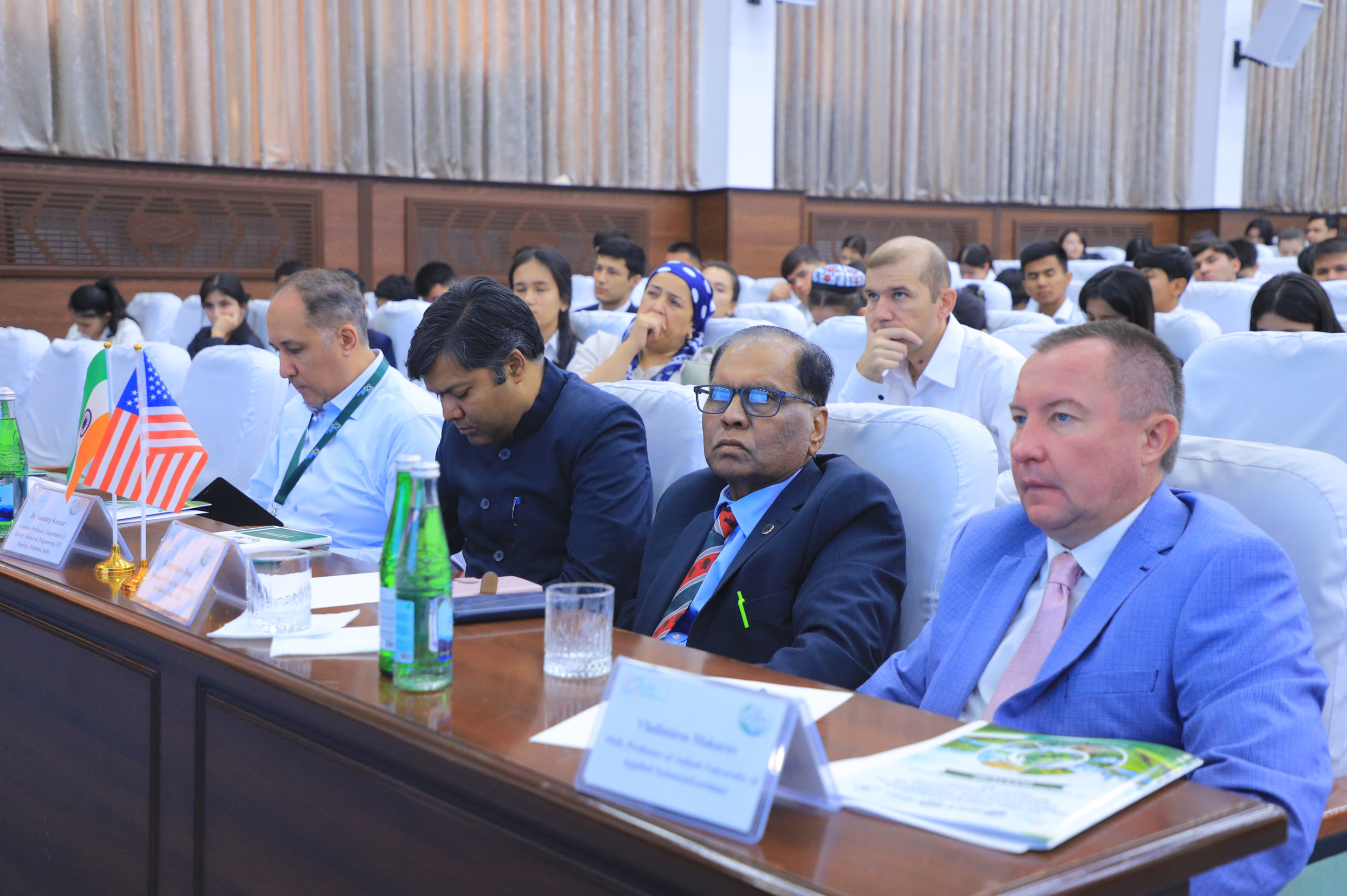
The forum brings together, both in person and online, scientists, experts, representatives of research institutions, government bodies, banks and enterprises from Germany, Italy, Morocco, India, the United States, Russia, Latvia, Kazakhstan, Uzbekistan and other countries.
As emphasized during the opening ceremony, the transition from the traditional economic model to a circular approach based on the rational and repeated use of resources has become increasingly important in today’s world. Transforming waste into resources, biomass into energy, and scientific ideas into innovative products was highlighted as one of the key objectives of the bioeconomy.
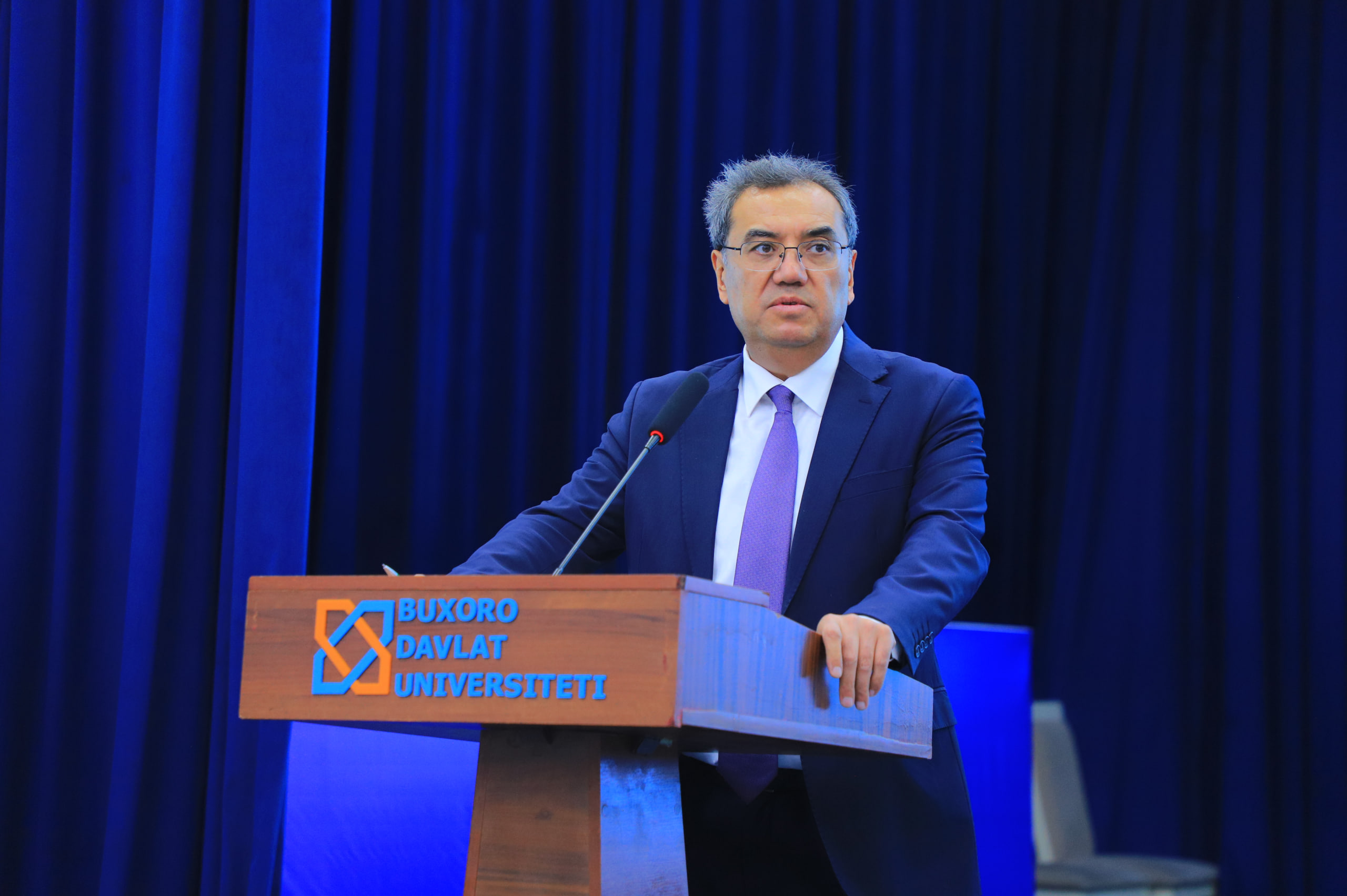
The international forum was officially opened by Professor Obidjon Khamidov, Rector of Bukhara State University.
In his address entitled “The Role of Bukhara State University in the Development of the Green and Circular Economy,” the Rector highlighted the practical initiatives, scientific research and efforts being undertaken at the University to promote the principles of sustainable development.
In particular, it was noted that the University operates a solar power station with a capacity of 1,210 kilowatt-peak, while systematic work is being carried out on waste sorting and composting across the campus, as well as on the introduction of water-saving technologies. Bukhara State University’s achievements in the UI GreenMetric 2025 ranking and its performance in the THE Impact Rankings 2026 were also highlighted.
During the first plenary session, scientific presentations by national and international experts were delivered.
In particular, Mahmud Oripov presented a report on the role and practical significance of the bioeconomy in achieving global and national Sustainable Development Goals.
The forum was also attended by Professor Vladimiros Makarov of Anhalt University of Applied Sciences in Germany, as well as Professor Hassan El Bari of Ibn Tofail University in Morocco, who also serves as President of the Moroccan Solid Waste Association.
Dr. Sandeep Kumar, Associate Professor at IIT Bombay, India, delivered a presentation on sustainable technologies for producing “green” hydrogen from waste through biomass gasification using oxygen and steam, as well as on the industrial utilization of thermal energy.
Hulkar Turobova, Associate Professor at Bukhara State University, discussed a comparative taxonomy of schools of thought in the circular economy, while Professor Raviprakash Dani of Texas Tech University, USA, analyzed new approaches aimed at climate adaptation and maintaining ecological balance.
As part of the forum, Dilbar Akhmedova, Chairwoman of the Bukhara Regional Branch of the International Association of Business Women “Tadbirkor ayol,” focused on poverty reduction through rural tourism and women’s entrepreneurship.
Alessio Tei, Associate Professor at the University of Genoa, Italy, addressed the social dimensions of developing the circular economy in agriculture.
The programme also includes contributions from representatives of the banking and real sectors — Bekmurod Nurmurodov, Zayniddin Niyozov and Jamil Jamilov, as well as Professor Dilshod Yavmutov of Bukhara State University and Kazakh scholar Maral Assanova. Their presentations focus on the green economy, green investment, circular approaches in agro-clusters, the rational use of water resources and solid municipal waste management.
The forum covers six major scientific areas. These include global and regional sustainable development policies and strategies, priorities for the development of the bioeconomy, the circular economy and efficient use of biomass, climate adaptation and ecological balance, renewable energy sources, as well as the relationship between the circular economy and social justice.
On 25 September, the forum will continue with separate thematic sessions covering these areas.
As a result of the two-day international dialogue, the participants are expected to develop a draft “roadmap” for the advancement of the regional circular bioeconomy, formulate pilot project concepts related to renewable energy and biomass utilization, and expand cooperation among international organizations, universities and research centres.
The forum programme also envisages the adoption of a final document — the “Bukhara Declaration.”
The international scientific platform is contributing to the exchange and integration of experience among scientists, experts, government representatives and business leaders, while promoting new scientific ideas and identifying new areas of practical cooperation in the fields of circular bioeconomy and sustainable development.
Bukhara State University Press Service


 buxdu_rektor@buxdu.uz
 (+998) 65 221-30-46


 EN
EN
 UZ
UZ
 RU
RU
 ZH-CN
ZH-CN