BUKHARA STATE UNIVERSITY
Department of Artificial Intelligence and Information Security
The Department specializes in preparing professionals and advancing scientific research in artificial intelligence, machine learning, information security, computer systems, and digital technologies.
Academic Heritage Since 1986
Current Name Since 2026
Artificial Intelligence
Cybersecurity
22
Scopus-Indexed Research Papers
19
State Certificates for Software Products
7
AI-Based Software Products
520 mln
UZS Grant Certificate, Women Scientists Competition
About the Department
The Department of Artificial Intelligence and Information Security operates within the Faculty of Physics, Mathematics and Information Technologies at Bukhara State University. Its historical origins date back to the Department of Informatics, Computer Engineering and Technical-Sector Facilities, established in 1986.
Under Bukhara State University Order No. 390-III dated April 20, 2026, the Department was reorganized under its current name, "Artificial Intelligence and Information Security."
The Department provides education and conducts research in information systems design and development, artificial intelligence technologies, information security, programming, and computer systems.
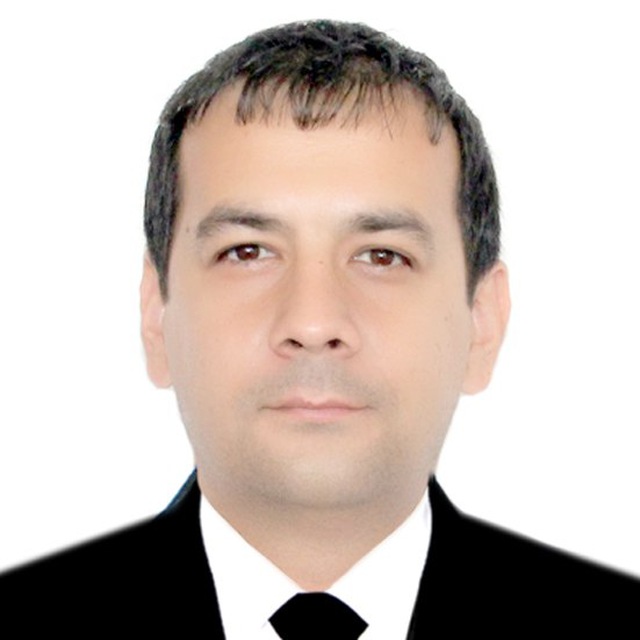
Head of Department: Bakayev Ilhom Izatovich — Doctor of Philosophy (PhD) in Technical Sciences, Associate Professor.
History and Development Milestones
1986 — Establishment of the Original DepartmentThe Department of Informatics, Computer Engineering and Technical-Sector Facilities was established. Its first Head was T.X. Sharipov, Candidate of Physical and Mathematical Sciences and Associate Professor.
1992–2005 — Informatics and Applied MathematicsThe Department operated under names including "Informatics and Mathematical Modeling," "Computational Mathematics and Informatics," and "Applied Mathematics and Information Technologies."
2020 — Information Technologies and SystemsThe Department was reorganized as "Information Technologies and Systems," with two independent departments formed from its structure.
2022 — The Digital Technologies EraUnder Order No. 1166-Sh dated August 27, the Department was renamed "Information Systems and Digital Technologies."
2026 — Artificial Intelligence and Information SecurityUnder Order No. 327-III dated April 1, I.I. Bakayev was appointed Head of the Department. Order No. 390-III of April 20 established its current name.
Former Department Heads and Academic Development
Over the years, the Department was headed by T.X. Sharipov, I.I. Jalolov, Z.Sh. Jumayev, R.D. Aloyev, A.G‘. Hayitov, J. Jumayev, I.G‘. Rasulov, T.B. Boltayev, O.I. Jalolov, N.S. Sayidova, and T.R. Shafiyev.
Between 2021 and 2025, T.R. Shafiyev, I.I. Bakayev, I.U. Shadmanov, G.Y. Bo‘ronova, U.H. Hayitov, S.S. Muxlisov, F.N. Nurulloyev, Sh.E. Nazarov, and M.Z. Husenov successfully defended their PhD dissertations.
One of the distinguished teachers who contributed to the Department's development is Telman Bakayevich Boltayev, who participated in preparing educational and methodological publications and mentoring young researchers.
Degree Programs and Specializations
The Department prepares professionals in information technologies, artificial intelligence, information security, and computer systems at bachelor's, master's, and doctoral levels.
BACHELOR'S DEGREE
Undergraduate Programs
60610100
Information Systems and Technologies
Full-time and distance education. The Department's principal program until 2026.
60610200
Information Security
Full-time education. Admissions began in the 2025/2026 academic year.
60610500
Artificial Intelligence
Full-time education. Admissions began in the 2025/2026 academic year.
A gradual transition is underway from the Information Systems and Technologies program to the new Information Security and Artificial Intelligence programs.
MASTER'S DEGREE
Master's Degree Specializations
70610101
Computer Systems and Their Software
70610103
Information Systems
70610501
Artificial Intelligence
Admissions began in 2026.
POSTGRADUATE RESEARCH EDUCATION
Doctoral Studies and Research Specializations
The Department conducts research in computer systems, mathematical modeling, and methods of teaching informatics.
05.01.04
Mathematical and Software Support for Computing Machines, Systems, and Computer Networks
Basic Doctoral Studies
05.01.07
Mathematical Modeling, Numerical Methods, and Software Packages
Doctoral and Basic Doctoral Studies
13.00.02
Theory and Methods of Education and Upbringing (Informatics)
Doctoral and Basic Doctoral Studies
Scientific Research Activities
The Department's research activities focus on artificial intelligence and machine learning, information security, cryptography, information systems development, and methodologies for teaching physics and mathematics.
RESEARCH AREA / 01
Artificial Intelligence and Machine Learning
Research on artificial intelligence algorithms, machine learning, and intelligent software systems.
RESEARCH AREA / 02
Information Security and Cryptography
Research related to information protection technologies and cryptographic methods.
RESEARCH AREA / 03
Information Systems
Studies of information systems design, development, and operation.
RESEARCH AREA / 04
Teaching Methodology
Research on teaching methods for physics, mathematics, and informatics.
2025/2026 ACADEMIC YEAR
Scientific Publications and Innovative Developments
Academic staff published research articles in international scientific publications and obtained state certificates for newly developed software products.
3
Articles in National Higher Attestation Commission Journals
19
State Certificates for Software Products
BREAKDOWN OF RESEARCH PUBLICATIONS
15 papersProceedings of SPIE
6 papersAIP Conference Proceedings
State Grants and Research Projects
STATE RESEARCH GRANT
Virtual Learning Platform for Robotics Education
Applied research project titled "Development of National Educational Content and a Virtual Learning Platform for Teaching Robotics."
Project Leader: Associate Professor G.Y. Bo‘ronova
Project Period: April 1, 2025 – March 31, 2026
AL-8624042640State Grant Identification Number
WOMEN SCIENTISTS COMPETITION
UZS 520 million
Research Grant Certificate
Associate Professor G.Y. Bo‘ronova won the "Women Scientists" Applied Projects Competition organized by the Ministry of Higher Education, Science and Innovations and was awarded a grant certificate.
Artificial Intelligence-Based Software Products
As part of the Department's scientific activities, state certificates were obtained for 19 software products, seven of which are based on artificial intelligence technologies.
LanguagePro AI
TASNIF AI
AI Learn Check
EduCheck
AI Trenajor Statistika
AirDustClean
EduEconomics Agent AI
Other Scientific Achievements and Student Activities
UZS 250M+
Research Commercialization
Funds attracted to the University's scientific innovation fund through the commercialization of approximately 20 commissioned applied research developments during 2020–2025.
4
International Scientific Conferences
International scientific and practical conferences organized between 2020 and 2025.
International Scientific Conference and Research Cooperation
On September 27–28, 2024, the Department organized an international scientific conference titled "Current State and Prospects for the Development of Digital Technologies and Artificial Intelligence" in cooperation with the Research Institute for the Development of Digital Technologies and Artificial Intelligence.
Students Awarded State Scholarships
2023: A student supervised by Professor N.N. Nurillayev received the State Scholarship of the President of the Republic of Uzbekistan.
2025: A student supervised by Associate Professor G.Y. Bo‘ronova received the Abu Rayhon Beruniy State Scholarship.
International Scientific Cooperation
To advance artificial intelligence and modern computer technologies, the Department cooperates with universities and research centers in Kazakhstan, India, and Mongolia.
ACCESS TO SUPERCOMPUTING RESOURCES
Param-Bilim Supercomputer
The Kazakhstan–India IKCEICT Center provided 20 free user profiles for master's students in Artificial Intelligence and Computer Systems and Their Software.
Universities and Research Centers in Kazakhstan
L.N. Gumilyov Eurasian National University
Cooperation with the Kazakhstan–India IKCEICT Center at the university includes professional development courses and research supervision. A one-year agreement was concluded with A.A. Kremenchutskiy for supervising basic doctoral researchers.
Al-Farabi Kazakh National University
Professor U.A. Tukeev delivered a short-term course in Fundamentals of Artificial Intelligence during the 2025/2026 academic year.
Cooperation with Organizations in India
Centre for Development of Advanced Computing (C-DAC)
Cooperation involving the Param supercomputer infrastructure and joint scientific research areas.
Maharashtra Knowledge Corporation Limited (MKCL)
Cooperation under a memorandum for the iLike Credit Courses program and AI-based educational courses delivered through the ERA LMS platform.
Scientific Cooperation with Mongolia
Mongolian University MUST
A joint research article was prepared in cooperation with N.S. Sayidova, and inter-university scientific collaboration is being developed.
Courses Taught by the Department
The Department offers specialized courses in programming, databases, artificial intelligence, cybersecurity, computer networks, and modern digital technologies.
60610100 — Information Systems and Technologies
- Programming 1, 2
- Databases
- Fundamentals of Cybersecurity
- Data Structures and Algorithms
- Computer Networks
- Fundamentals of Artificial Intelligence
- Information Systems Development Methodology
- Big Data Management
- Cloud Technologies
- Web Systems
- Information Systems Data Visualization
60610200 — Information Security
- Programming 1, 2
- Databases
- Fundamentals of Cybersecurity
- Cryptographic Methods
- Risk Management
- Access Control
- Network Security
- Software Security
- Cyber Law and Cyber Ethics
60610500 — Artificial Intelligence
- Programming 1, 2
- Databases
- Fundamentals of Cybersecurity
- Fundamentals of Artificial Intelligence
- Computer Vision
- Neural Networks and Deep Learning
- Robotics
- Introduction to Machine Learning
- Signal Processing
- Natural Language Processing
Technical Facilities and Computer Laboratories
The Department uses modern computer equipment and network devices to support practical courses in programming, artificial intelligence, and information security.
FEBRUARY 2026
Approximately UZS 730 million
The estimated total value, as stated in the supplied document, of modern computer, networking, and multimedia equipment allocated to the Department.
54
HP All-in-One Computers
Detailed List of Allocated Equipment
| Equipment | Quantity |
|---|
| Acer V15 (Core i7-13620H, RTX 4050) | 1 |
| Network Switches (24-Port) | 4 |
| HP ProOne 440 G6 (Core i5-10500T) | 9 |
| HP ProOne 440 G6 (Core i5-10100T) | 45 |
| ASUS TUF Gaming (Core i7-12650H, RTX 3070) | 2 |
| EB-X400 Multimedia Projectors | 2 |
| Printers, Scanners, and Multifunction Devices | 2 |
| Computer Peripherals | 76 |
BUKHARA STATE UNIVERSITY
Artificial Intelligence and Information Security — Modern Education, Scientific Research, and Digital Technologies
Modern EducationTraining professionals in artificial intelligence, information security, programming, and computer systems.
Scientific InnovationAI-based software products, scientific publications, and grant-funded projects.
International CooperationCollaboration with foreign universities, research centers, and supercomputing infrastructure.


 buxdu_rektor@buxdu.uz
 (+998) 65 221-30-46


 EN
 UZ
 RU
 ZH-CN