BUKHARA STATE UNIVERSITY
Department of Physics
A department contributing to the development of physics education and scientific research since 1931. Its academic and research activities focus on condensed matter physics, magnetic phenomena, superconductivity, optics, and semiconductor physics.
Established in 1931
Physics Education
Condensed Matter Physics
Magnetic Phenomena
1931
Year of Establishment
153
Undergraduate Students
300+
Research Articles Published Over the Last 5 Years
About the Department
The Department of Physics was established in 1931 and is one of Bukhara State University's academic departments with longstanding teaching and research traditions. Since its establishment, the Department has contributed to physics education, the advancement of scientific research, and the training of highly qualified specialists.
Professors and lecturers who have worked at the Department over the years have made valuable contributions to strengthening its academic capacity, developing modern research areas, and improving its facilities and technical resources.
The Department conducts research in theoretical and applied physics, including superconductivity, condensed matter physics, magnetic phenomena, optics, and semiconductor physics.
The Department cooperates with research institutes of the Academy of Sciences of the Republic of Uzbekistan, universities, Presidential Schools, academic lyceums, and technical colleges in education and scientific research.
History and Academic Traditions
1931 — Establishment of the Department of Physics
The Department of Physics was established during the early years of the Bukhara State Pedagogical Institute, laying the foundation for physics education and specialist training.
Development of an Academic and Research Tradition
Numerous professors and associate professors contributed to scientific research, teaching activities, and the development of physics education at the Department.
Expansion of Research Areas
Research in condensed matter physics, magnetic phenomena, optics, semiconductor physics, and superconductivity has developed at the Department.
Modern Era — Education, Research, and Cooperation
The Department focuses on undergraduate, master's, and postgraduate research education, scientific publications, and cooperation with leading research institutions.
Degree Programs and Specializations
The Department offers a bachelor's degree program in Physics and master's degree programs in Physics and Semiconductor Physics.
BACHELOR'S DEGREE
Undergraduate Program
60530500
Physics
Undergraduate training in Physics.
MASTER'S DEGREE
Master's Degree Specializations
70530501
Physics (by Specialization)
13 Master's Students
70530905
Semiconductor Physics
11 Master's Students
POSTGRADUATE RESEARCH EDUCATION
Basic Doctoral Studies, Doctoral Studies, and Research Traineeships
The Department offers postgraduate research training in Condensed Matter Physics and Physics of Magnetic Phenomena.
01.04.07
Condensed Matter Physics
Research Specialization
01.04.09
Physics of Magnetic Phenomena
Research Specialization
Scientific Research Activities
The Department conducts fundamental and applied research in modern physics. Its principal research areas include superconductivity, condensed matter physics, magnetic phenomena, optics, and semiconductor physics.
RESEARCH AREA / 01
Superconductivity Physics
Investigations of superconducting phenomena and their physical properties.
RESEARCH AREA / 02
Condensed Matter Physics
Research on the physical properties of condensed matter and related theoretical models.
RESEARCH AREA / 03
Physics of Magnetic Phenomena
Research on ferromagnetic materials, magnetic domains, and magneto-optical phenomena.
RESEARCH AREA / 04
Optics
Scientific investigations of light and optical phenomena.
RESEARCH AREA / 05
Semiconductor Physics
Research on semiconductor materials, their physical parameters, and electronic devices.
Priority Research Topics
Department researchers investigate the following topics in the physics of magnetic phenomena and condensed matter.
PHYSICS OF MAGNETIC PHENOMENA
Magnetic Materials and Magneto-Optical Effects
- Domain Structure of Weak Ferromagnets
- Faraday Effect
- Kerr Effect
CONDENSED MATTER PHYSICS
Physical Phenomena and Theoretical Models
- Meissner Effect
- Casimir–Kempt Model
- Research Related to Condensed Matter Physics
RESEARCH OUTPUT
Scientific Publications and Talented Student Research
Department members publish research findings in international and national scientific journals and pay special attention to engaging students in research.
300+
Research Articles Published Over the Last 5 Years
50+
Talented Students Involved in Research
100+
Student Research Articles Published Over the Last 3 Years
Scientific and Academic Cooperation
The Department of Physics maintains research and educational cooperation with institutes of the Academy of Sciences of the Republic of Uzbekistan, leading universities, and specialized educational institutions.
RESEARCH INSTITUTES
Cooperation with Institutes of the Academy of Sciences
Institute of Ion-Plasma and Laser Technologies
Institute of Nuclear Physics
Physicotechnical Institute
Institute of Materials Science
Physics-Sun Research and Production Association
Cooperation with Universities in Uzbekistan
- National University of Uzbekistan
- Samarkand State University
- Karshi State University
- Urgench State University
- Fergana State University
- Andijan State University
- Karakalpak State University
EDUCATIONAL AND METHODOLOGICAL COOPERATION
Presidential Schools, Academic Lyceums, and Technical Colleges
The Department carries out educational and methodological activities and practical cooperation with Presidential Schools, academic lyceums, and technical colleges.
Courses Taught by the Department
The Department offers compulsory, elective, and specialized courses at bachelor's and master's degree levels. The courses are listed separately for each program below.
60530500 — Physics: Compulsory Courses
BACHELOR'S DEGREE / COMPULSORY COURSES
- Mechanics
- Physics Laboratory (Mechanics)
- Electricity and Magnetism
- Physics Laboratory (Electricity and Magnetism)
- Molecular Physics
- Physics Laboratory (Molecular Physics)
- Optics
- Physics Laboratory (Optics)
- Methods of Mathematical Physics
- Methods of Teaching Physics and Astronomy
- Fundamentals of Radio Electronics
- Atomic Physics
- Nuclear and Elementary Particle Physics
- Physics Laboratory (Atomic Physics)
- Physics Laboratory (Nuclear and Elementary Particle Physics)
- Electrodynamics
- Computer Modeling of Physical Processes
- Theoretical Mechanics
- Quantum Mechanics
- Statistical Physics
- Electronics and Signal Processing
- Astronomy and Astrophysics
60530500 — Physics: Elective Courses
BACHELOR'S DEGREE / ELECTIVE COURSES
- Laser Physics
- Solid State Physics
- Polymer Physics
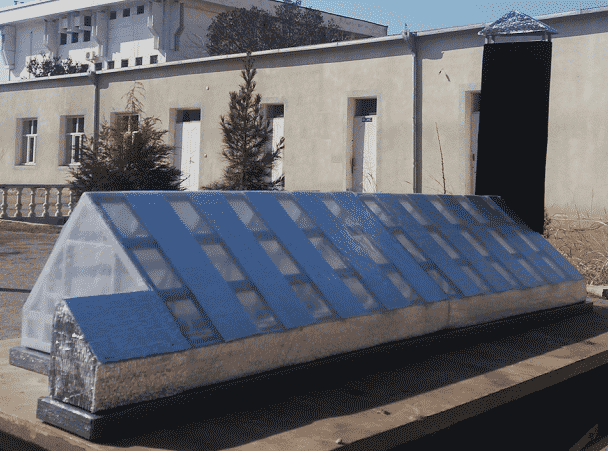
- Utilization of Solar Energy
- Physics of Semiconductors and Dielectrics
- Applied Optics
70530501 — Physics (by Specialization)
MASTER'S DEGREE COURSES
- Modern Research Methods in Physics
- Theory of Nonlinear Oscillations and Waves
- Interaction of Electromagnetic Radiation with Matter
Semiconductor Physics — Master's Degree Courses
MASTER'S DEGREE COURSES
- Semiconductor Physics
- Physics of Semiconductor Devices
- Methods for Determining Semiconductor Parameters
BUKHARA STATE UNIVERSITY
Department of Physics — Academic Traditions, Modern Education, and Fundamental Research
Physics Education
Training specialists at undergraduate, master's, and postgraduate research levels.
Scientific Research
Research in condensed matter physics, magnetic phenomena, superconductivity, optics, and semiconductors.
Scientific Cooperation
Cooperation with institutes of the Academy of Sciences, universities, and specialized educational institutions.


 buxdu_rektor@buxdu.uz
 (+998) 65 221-30-46


 EN
 UZ
 RU
 ZH-CN